Numerical methods play a crucial role in the field of mathematics and are widely used in various applications, including engineering, physics, and computer science. In the Philippines, numerical methods are taught and implemented in academic institutions to solve complex mathematical problems that may be difficult or impossible to solve analytically.
Category : | Sub Category : Posted on 2025-11-03 22:25:23
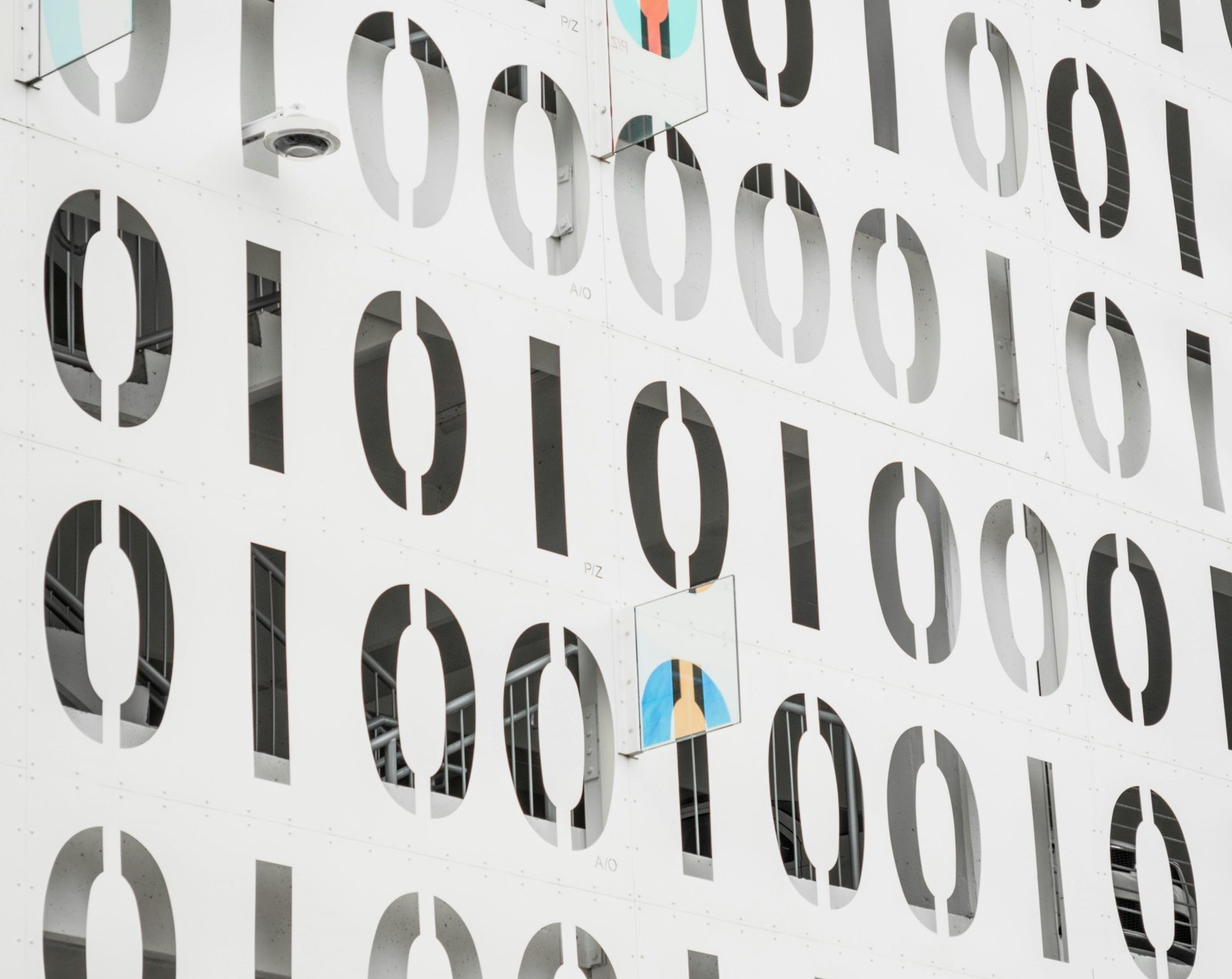
One of the most commonly used Numerical methods in the Philippines is the Newton-Raphson method. This method is used to find the roots of a real-valued function. By iteratively applying a simple formula, the Newton-Raphson method can converge to a root of the function with a high degree of accuracy. This method is particularly useful in solving nonlinear equations and is a staple in many introductory numerical analysis courses in the Philippines. Another important numerical method used in the Philippines is numerical integration. Integration is a fundamental concept in mathematics that involves finding the area under a curve. Numerical integration techniques, such as the trapezoidal rule or Simpson's rule, are used to approximate the value of a definite integral when an analytical solution is not feasible. In the Philippines, these methods are often used in applications such as computational physics, engineering simulations, and financial modeling. Additionally, numerical methods are employed in solving systems of linear equations, interpolation, curve fitting, and solving differential equations. These techniques are essential in various fields, including signal processing, image processing, and machine learning. In conclusion, numerical methods are an indispensable tool in the Philippines for solving mathematical problems that arise in a wide range of applications. With the increasing reliance on computational methods in research and industry, a solid understanding of numerical techniques is essential for Filipino students and professionals in STEM fields. By mastering these methods, one can efficiently tackle complex problems and contribute to the advancement of science and technology in the Philippines and beyond. Have a look at https://www.departements.org Here is the following website to check: https://www.regionales.net For a broader perspective, don't miss https://www.philippinesinfo.com To expand your knowledge, I recommend: https://www.matrices.org
Leave a Comment:
SEARCH
Recent News
- Zurich, Switzerland: Exploring Numerical Methods
- Zurich, Switzerland is a vibrant and cosmopolitan city known for its stunning natural beauty, historic architecture, and high quality of life. In recent years, Zurich has also gained recognition as a leading global financial hub and a key player in the digital economy. One interesting aspect of Zurich's thriving business landscape is its establishment as a "matrix" for various industries and technologies.
- Zurich, Switzerland is not only known for its stunning views, vibrant culture, and high standard of living, but also for its strong emphasis on mathematics education. With a rich history in the field of mathematics and a commitment to excellence in STEM (Science, Technology, Engineering, and Mathematics) education, Zurich has established itself as a hub for mathematical research and innovation.
- Zurich, Switzerland is a city that is renowned for its logical approach to various aspects of life. From its efficient public transportation system to its well-organized urban planning, Zurich exemplifies a sense of logic and order that is evident in every corner of the city.
- Tips for Creating and Translating Math Content for YouTube
- The Logic Behind Creating and Translating YouTube Content
- Exploring Numerical Methods on YouTube Channels
- YouTube has become a popular platform for learning and education, offering a plethora of content from various fields, including mathematics. There are numerous YouTube channels dedicated to making math more accessible and engaging for viewers of all ages and skill levels. These channels cover a wide range of topics, from basic arithmetic to advanced calculus, making it easier for those seeking to improve their mathematical understanding.
READ MORE
11 months ago Category :

Zurich, Switzerland: Exploring Numerical Methods
Read More →11 months ago Category :

Zurich, Switzerland is a vibrant and cosmopolitan city known for its stunning natural beauty, historic architecture, and high quality of life. In recent years, Zurich has also gained recognition as a leading global financial hub and a key player in the digital economy. One interesting aspect of Zurich's thriving business landscape is its establishment as a "matrix" for various industries and technologies.
Read More →11 months ago Category :

Zurich, Switzerland is not only known for its stunning views, vibrant culture, and high standard of living, but also for its strong emphasis on mathematics education. With a rich history in the field of mathematics and a commitment to excellence in STEM (Science, Technology, Engineering, and Mathematics) education, Zurich has established itself as a hub for mathematical research and innovation.
Read More →11 months ago Category :
