Maths plays a crucial role in image processing, a field that involves manipulating digital images to enhance their quality, analyze their contents, or extract useful information from them. By applying various mathematical principles, techniques, and algorithms, image processing experts can perform tasks such as image enhancement, restoration, segmentation, and pattern recognition. Let's delve into some of the key mathematical concepts that underpin image processing:
Category : | Sub Category : Posted on 2025-11-03 22:25:23
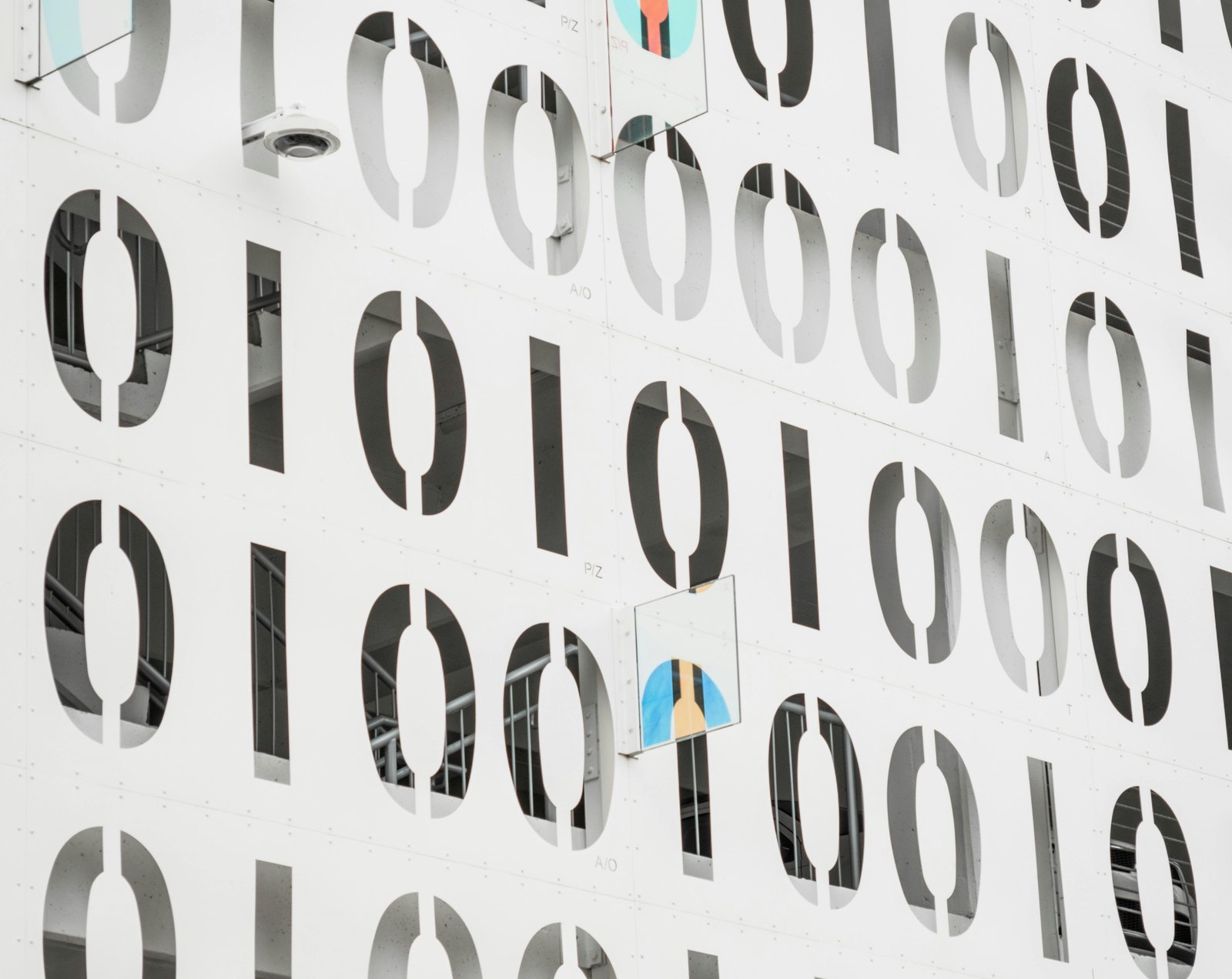
1. **Pixel Manipulation**: At the heart of all digital images are pixels, the smallest individual units of an Image. Each pixel is represented by a numerical value that denotes its color or intensity. By manipulating these pixel values using mathematical operations like addition, subtraction, multiplication, and division, image processing algorithms can alter the appearance of an image, such as adjusting its brightness, contrast, or color balance. 2. **Filters and Convolution**: Filters are mathematical operations applied to an image to highlight or suppress certain features. One commonly used filter in image processing is the convolution operation, which involves sliding a small matrix called a kernel over the image and computing the weighted sum of pixel values in the neighborhood of each pixel. Convolution is often used for tasks like edge detection, blurring, or sharpening images. 3. **Fourier Transform**: The Fourier transform is a mathematical tool that decomposes an image into its frequency components. By converting an image from the spatial domain to the frequency domain, image processing algorithms can analyze the image's high and low-frequency patterns, which can be useful for tasks like denoising, compression, or detecting periodic structures in images. 4. **Image Segmentation**: Image segmentation is the process of partitioning an image into multiple regions or objects based on certain criteria, such as color, intensity, or texture. Mathematical techniques like clustering algorithms, watershed transform, or active contours are commonly used for image segmentation, enabling applications like object recognition, medical image analysis, or autonomous driving. 5. **Machine Learning and Deep Learning**: In recent years, machine learning and deep learning techniques have revolutionized image processing by enabling the development of sophisticated models that can learn to extract features and make predictions from images automatically. Mathematical concepts like neural networks, convolutional neural networks (CNNs), and recurrent neural networks (RNNs) play a central role in these advanced image processing systems. In conclusion, the field of image processing relies heavily on mathematical principles and techniques to manipulate and analyze digital images effectively. By leveraging mathematical concepts like pixel manipulation, filters, Fourier transform, image segmentation, and deep learning, image processing experts can extract valuable information from images, enabling a wide range of applications across various industries, from healthcare and surveillance to entertainment and art. Explore this subject further for a deeper understanding. https://www.computacion.org To learn more, take a look at: https://www.metrologia.net For a deeper dive, visit: https://www.matrices.org
Leave a Comment:
SEARCH
Recent News
- Zurich, Switzerland: Exploring Numerical Methods
- Zurich, Switzerland is a vibrant and cosmopolitan city known for its stunning natural beauty, historic architecture, and high quality of life. In recent years, Zurich has also gained recognition as a leading global financial hub and a key player in the digital economy. One interesting aspect of Zurich's thriving business landscape is its establishment as a "matrix" for various industries and technologies.
- Zurich, Switzerland is not only known for its stunning views, vibrant culture, and high standard of living, but also for its strong emphasis on mathematics education. With a rich history in the field of mathematics and a commitment to excellence in STEM (Science, Technology, Engineering, and Mathematics) education, Zurich has established itself as a hub for mathematical research and innovation.
- Zurich, Switzerland is a city that is renowned for its logical approach to various aspects of life. From its efficient public transportation system to its well-organized urban planning, Zurich exemplifies a sense of logic and order that is evident in every corner of the city.
- Tips for Creating and Translating Math Content for YouTube
- The Logic Behind Creating and Translating YouTube Content
- Exploring Numerical Methods on YouTube Channels
- YouTube has become a popular platform for learning and education, offering a plethora of content from various fields, including mathematics. There are numerous YouTube channels dedicated to making math more accessible and engaging for viewers of all ages and skill levels. These channels cover a wide range of topics, from basic arithmetic to advanced calculus, making it easier for those seeking to improve their mathematical understanding.
READ MORE
11 months ago Category :

Zurich, Switzerland: Exploring Numerical Methods
Read More →11 months ago Category :

Zurich, Switzerland is a vibrant and cosmopolitan city known for its stunning natural beauty, historic architecture, and high quality of life. In recent years, Zurich has also gained recognition as a leading global financial hub and a key player in the digital economy. One interesting aspect of Zurich's thriving business landscape is its establishment as a "matrix" for various industries and technologies.
Read More →11 months ago Category :

Zurich, Switzerland is not only known for its stunning views, vibrant culture, and high standard of living, but also for its strong emphasis on mathematics education. With a rich history in the field of mathematics and a commitment to excellence in STEM (Science, Technology, Engineering, and Mathematics) education, Zurich has established itself as a hub for mathematical research and innovation.
Read More →11 months ago Category :
